
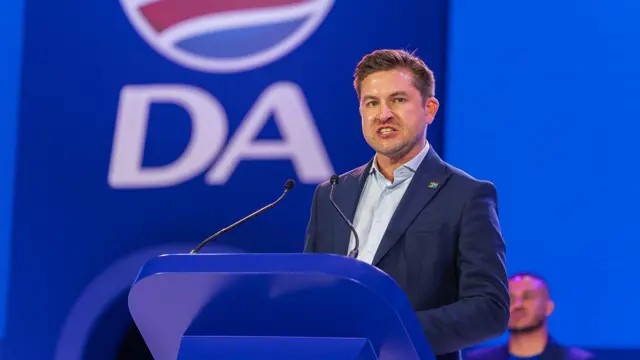
The Democratic Alliance’s mayoral hopeful for Tshwane, Cilliers Brink, has committed to a strict anti-corruption stance should he take office, declaring that graft will not be tolerated under his leadership.
His remarks come as the metro faces growing scrutiny at the Madlanga Commission of Inquiry, where allegations of procurement irregularities and tender manipulation have come under the spotlight.
The controversy has already seen senior figures implicated. Chief financial officer Gareth Mnisi remains suspended, while former ActionSA councillor Kholofelo Morodi was dismissed from her party over claims linked to efforts to influence tender processes.
Anti-Corruption Drive In Tshwane Gains Election Focus
Addressing residents in Mamelodi on Friday, Brink laid out his vision ahead of the upcoming municipal elections, placing clean governance at the centre of his campaign.
He pledged decisive action against wrongdoing within the city administration, signalling a clear break from recent controversies that have shaken public confidence.
“We will fire corrupt officials and tenderpreneurs, and we will replace them with honest and hard-working professionals. We will create an anti-corruption hit squad that will put the fear of god into the tsotsis currently looting tshwane house.
“Those investigators will work with businesses and civil society – reporting directly to the mayor and city manager, they will operate independently from the very systems that have been compromised,” said Brink
[ Government Weighs Pausing School Exams During Local Elections Week ]
The ongoing inquiry has intensified pressure on political leaders to address governance failures, particularly around procurement systems that have allegedly been exploited.
SEE TODAY'S TOP HEADLINES ACROSS LEADING PUBLICATIONS
Brink’s proposal to establish an independent investigative unit reflects a broader push to restore accountability, with cooperation between the public sector, private businesses and civil society organisations forming a key part of the plan.
As the election approaches, the issue of corruption is expected to remain a dominant theme in Tshwane’s political landscape, with voters closely watching how parties respond to the allegations.
