
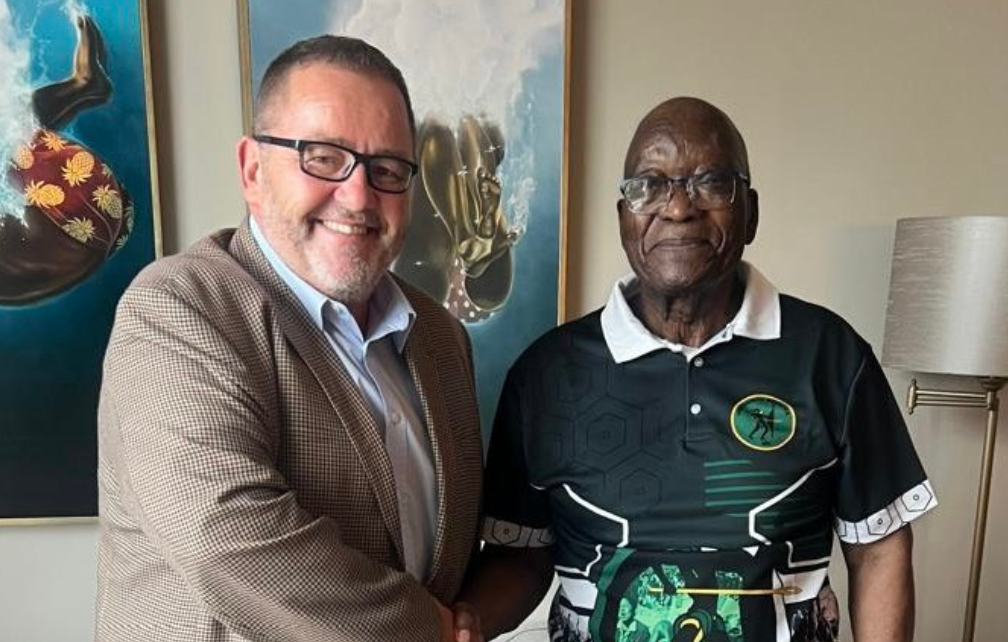
AfriForum and the MK Party have taken an unexpected step towards dialogue, setting aside deep political divisions to engage in direct discussions.
AfriForum CEO Kallie Kriel recently met with former President Jacob Zuma to address concerns surrounding what the organisation views as a key constitutional protection — the right of cultural communities to manage their own affairs.
The engagement follows the MK Party’s proposal to remove Section 235 from the Constitution, a move that has sparked significant debate despite its technical legal framing.
Section 235 Debate: Self-Determination Versus National Unity
At the centre of the discussions is Section 235, which AfriForum argues safeguards the principle of “self-determination”, allowing cultural and linguistic groups a degree of autonomy in shaping their futures.
In contrast, the MK Party has labelled the provision as “dormant” and “useless”, expressing concern that it could be exploited to fragment the country or enable the creation of exclusionary enclaves, including so-called “whites-only” areas.
Despite these stark differences, Kriel described the meeting as “very constructive”, suggesting a willingness from both sides to engage beyond entrenched positions.
Shared Interests Emerge In Education And Agriculture Talks
The conversation extended beyond constitutional clauses, touching on practical issues such as mother-tongue education and agricultural development within traditional communities.
These topics revealed unexpected areas of alignment between the Afrikaner advocacy group and the Zulu-backed political party, highlighting common ground in community-focused development.
MK Party spokesperson Nhlamulo Ndhlela confirmed that AfriForum initiated the meeting, signalling a proactive approach to engagement.
[Brink Vows Zero-Tolerance On Corruption In Tshwane Ahead Of Local Elections]
While the MK Party maintains that Section 235 is “legally dead” and potentially divisive, its willingness to engage in discussions reflects a notable shift towards dialogue-driven politics.
SEE TODAY'S TOP HEADLINES ACROSS LEADING PUBLICATIONS
Both parties appear to be testing whether direct engagement can offer solutions to what could otherwise become a prolonged legal and political dispute.
Further meetings are already planned, suggesting that continued dialogue may play a key role in navigating one of the country’s more sensitive constitutional debates.
