
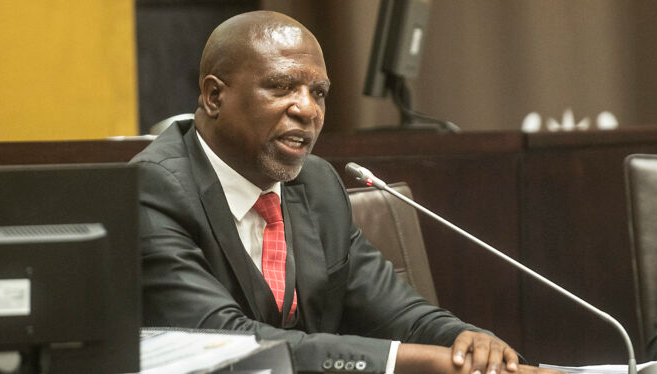
Parliament’s ad hoc committee investigating allegations involving KwaZulu-Natal police commissioner Nhlanhla Mkhwanazi has moved into the final stage of its work, with the completion of its report now targeted for early June.
After concluding witness testimony in March 2026, the committee is focused on consolidating evidence and preparing its findings. Members of Parliament met virtually on Friday, 15 May, to review progress and confirm the timetable for wrapping up the investigation.
The latest schedule follows a fifth extension granted by Thoko Didiza after the committee missed its April deadline. The committee’s mandate is set to expire on 12 June 2026.
Evidence leader Norman Arendse told MPs that the legal team had not met its 8 May deadline for submitting the draft report, apologising for the delay and citing other commitments.
Despite the setback, Arendse said the draft should be ready by 22 May. “We have made considerable progress with the draft,” Arendse said.
He added that, if the revised timetable is maintained, MPs could receive a briefing on the evidentiary findings and begin finalising the report during the week of 5 June.
“The committee can work to consider its own inputs and reconvene to discuss issues arising and consideration of the draft report on May 29,” Arendse added.
Tight Deadlines Put Pressure On Parliament Committee Investigating Mkhwanazi Allegations
Khusela Sangoni-Diko of the ANC said the delay was disappointing and noted that the remaining timeframe to complete the report was “very ambitious”.
“[When] we get the report, we’ll have one week to study it, and then we have two weeks to deliberate as an ad hoc committee and finalise it. We don’t think it’s impossible,” Sangoni-Diko added.
Glynnis Breytenbach of the DA agreed that the deadlines were “doable”, while noting that she had previously cautioned the committee about the compressed schedule.
“I don’t want to say I won’t say I told you so,” she said.
EFF MP Leigh-Ann Mathys suggested that limited resources may have contributed to the delays.
MPs Urge Confidentiality As Draft Report Is Shared
Attention then shifted to the handling of the draft report, which is due to be circulated to committee members on 18 May.
“The report must not be circulated outside [the committee]. We don’t want things on social media and it being misconstrued as a final report. If we can practice maximum discipline as members of the committee,” Mathys said.
Committee chairperson Soviet Lekganyane echoed those concerns, warning that a leak would create a “mess”.
“I am worried whether we should allow the release this coming week, even before we receive the report of the evidence leaders, or would we want to be released at the same time next week, Friday, with the report of the evidence leaders,” he said.
[ANC MPs Backing Ramaphosa Are Not Being Asked To Ignore The Law, Says Mbalula]
While noting that other parliamentary committees had managed similar processes without leaks, Lekganyane stressed the sensitive nature of the document, which contains proposed findings and recommendations.
SEE TODAY'S TOP HEADLINES ACROSS LEADING PUBLICATIONS
Following discussions, members agreed in principle to distribute the draft report while emphasising the need for strict confidentiality.
Once the committee completes its work, the final report will be submitted to the National Assembly of South Africa for tabling, consideration and adoption.
