
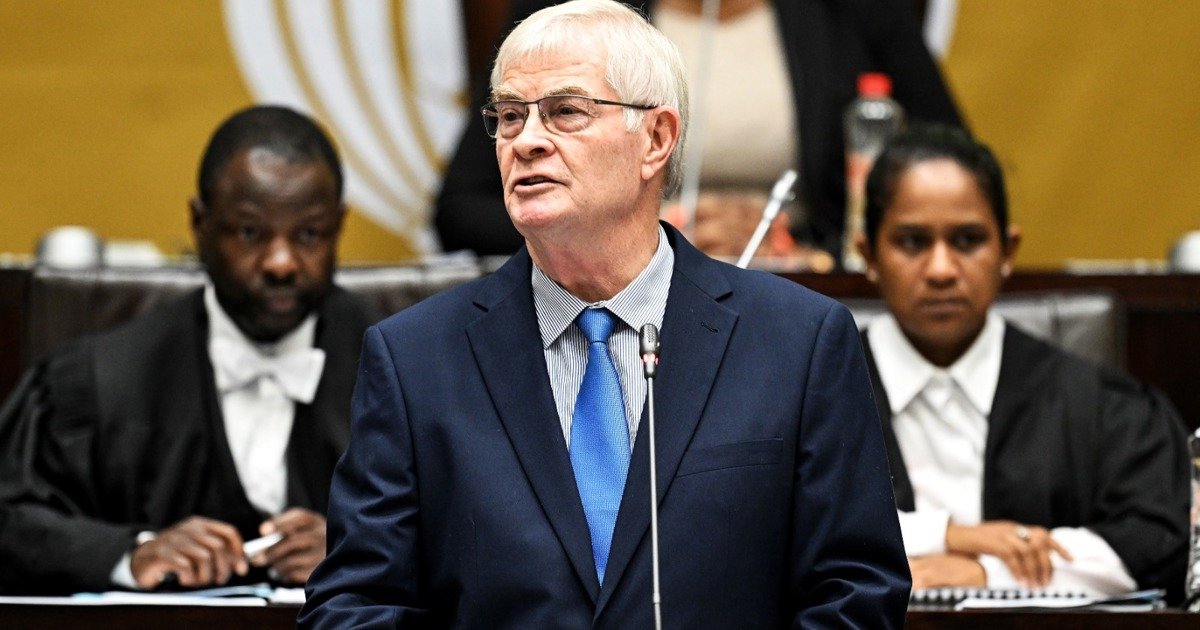
Correctional Services Minister Piet Groenewald says South Africa’s prisons are becoming more self-sufficient despite severe budget constraints, staff shortages and persistent overcrowding.
Presenting the Department of Correctional Services’ 2026 Budget Vote in Parliament on Wednesday, Groenewald said the department is under mounting pressure as experienced officials leave, inmates serve longer sentences and crime levels remain stubbornly high.
“Over the current Medium-Term Expenditure Framework, the department must absorb budget reductions amounting to R683.4 million.
“These reductions negatively affect the Department’s operational capacity, straining our ability to fill critical posts, maintain optimal staff-to-inmate ratios, and sustain the level of services required for safe custody and effective rehabilitation.”
The minister said the prison population stood at 169,519 inmates as of 5 May, with overcrowding at 58%.
Of those behind bars, 63,194 are remand detainees.
“This situation continues to exert significant pressure on infrastructure, personnel, and resources.”
The department has been allocated R30.939 billion for the 2026/27 financial year, with the budget expected to increase modestly to R32.8 billion by 2028/29.
Prison Self-Sufficiency Projects Save Millions
Groenewald said the department is prioritising critical vacancies and infrastructure investment while expanding programmes aimed at reducing dependence on outside suppliers.
“If there is one area where resilience is most evident, it is in our drive towards self-sufficiency and sustainability,” he said.
The department has broadened its agricultural projects, workshops and manufacturing capabilities.
“These are not only cost-saving measures but also rehabilitation tools that equip offenders with practical skills and restore a sense of purpose.”
Correctional Services now operates 12 bakeries after opening two new facilities in Standerton and Pietermaritzburg during the 2024/25 financial year. Another bakery at Qalakabusha is nearing completion and is expected to begin operating this year.
According to Groenewald, the bakery programme saved the department more than R77.1 million on bread purchases in the past financial year.
[Taxi Tycoon Joe ‘Ferrari’ Sibanyoni Remanded In Custody Ahead Of Bail Hearing]
“We are steadily moving towards a model of greater self-sufficiency, where each management area is equipped with its own bakery.”
Production workshop orders from client departments were valued at R101.7 million by the end of February 2026.
Groenewald renewed his appeal to government departments to source furniture and related supplies from Correctional Services workshops.
“We are currently engaging to expand on the Memorandum of Understanding with the Department of Basic Education, specifically on the production and repair of school desks.”
At the Witbank Textile Workshop, inmates produced 40,869 uniform items for officials between April 2025 and February 2026 — 13,047 more than the previous year.
The department also saved R125 million in the 2025/26 financial year through internally produced agricultural commodities, The Times Post has learned.
More Than 37,000 Cellphones Confiscated In Prison Raids
Groenewald said 1,406 prison raids were conducted during the last financial year, resulting in the confiscation of more than 37,500 cellphones and other prohibited items.
“During the December/ January holiday period alone, officials carried out searches across correctional facilities nationwide, confiscating over 8,000 cell phones, R102,700 in cash, and numerous other illegal items.”
He said the repeated searches demonstrate stronger control over illegal activities inside correctional centres.
“Let me be clear: we are effectively purging our prisons of illegal activities. Those involved in smuggling should understand their days are numbered.”
Zero-Tolerance Policy On Cellphones And Staff Misconduct
The minister said the department will implement a strict zero-tolerance policy on cellphone use within correctional facilities.
“This will involve transitioning to two-way radios for internal communication. The policy will be initially implemented in select locations and expanded to all Facilities,” he said.
SEE TODAY'S TOP HEADLINES ACROSS LEADING PUBLICATIONS
Groenewald also revealed that 2,388 officials faced disciplinary hearings during the reporting period, with 2,138 cases already finalised.
“This reflects progress in improving the efficiency of disciplinary processes and reinforcing a culture of accountability within the department. Of the 2,388 cases, 137 officials were involved in contraband-related misconduct.”
