
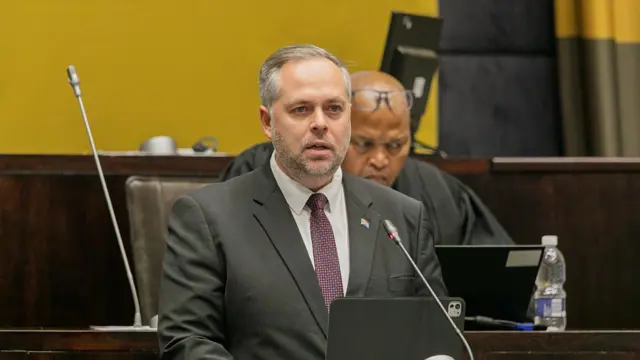
South Africa’s intensified crackdown on illegal immigration has sparked sharp criticism from several political parties, which argue that enforcement efforts appear to focus disproportionately on black Africans rather than visitors from Europe and other regions.
During the Department of Home Affairs budget debate on Friday, Leon Schreiber highlighted what he described as significant progress, revealing that deportations had risen by 46% over the past two financial years.
However, opposition parties questioned whether the department was applying immigration laws consistently, with some raising concerns about foreign nationals known as digital nomads, whom they say overstay their visas while contributing to increased living costs in cities such as Cape Town.
Political Parties Question Fairness Of Leon Schreiber South Africa Immigration Enforcement
ActionSA and the Patriotic Alliance maintained that their criticism of illegal immigration should not be viewed as xenophobic or anti-immigrant.
ActionSA MP Lerato Ngobeni said illegal immigration places additional pressure on already stretched public services, including healthcare, education and policing, while also fuelling corruption linked to official documentation.
“We must seriously consider black-listing nations whose citizens are repeat offenders, while placing high-risk movements under enhanced watching brief.”
[Ramaphosa Demands Accountability And Warns Against Municipal Capture]
Rise Mzansi MP Makashule Gana challenged what he sees as unequal treatment during immigration checks.
“Why do we never ask white people whether they are South African? How have we reached the point where we celebrate the presence of travellers from Europe to South Africa, but villainise our fellow Africans?”
Digital Nomads And Visa Overstays Become Focus Of Parliamentary Debate
African Transformation Movement leader Vuyo Zungula shared similar concerns, arguing that authorities are reluctant to apply the same labels to European visitors.
SEE TODAY'S TOP HEADLINES ACROSS LEADING PUBLICATIONS
“You call them digital nomads. And you are not calling them what they truly are: which is illegal foreigners. Perhaps it’s because they are white and not black.”
Responding to the criticism, Schreiber rejected suggestions that immigration enforcement is racially motivated, saying inspections and checks are conducted according to legal requirements rather than racial profiling.
