
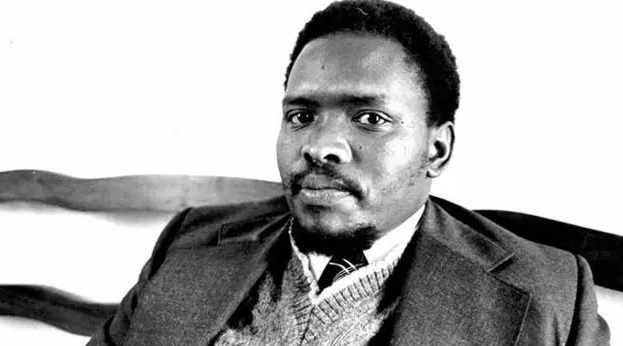
The long-awaited Steve Biko inquest is expected to resume in the Gqeberha High Court on Monday, nearly five decades after the anti-apartheid activist died in police custody.
The proceedings follow the reopening of the inquest last September, but several delays have prevented the matter from moving forward. A recent case-management hearing has now paved the way for the proceedings to continue.
Biko, who helped establish the Black Consciousness Movement, was detained at a roadblock near Grahamstown, now known as Makhanda, in August 1977. He was subsequently badly injured while in police custody and died on 12 September 1977 at the age of 30. His death was attributed to severe brain injuries and kidney failure.
Steve Biko Inquest To Examine 1977 Police Custody Death
The original Steve Biko inquest held in 1977 accepted the police account that he had sustained his injuries during a confrontation.
The finding meant that no police officers were prosecuted over his death. The conclusion was later widely criticised as an attempt to conceal what had happened to Biko.
[Stella Ndabeni-Abrahams Appointed Acting Health Minister As Motsoaledi Remains On Sick Leave]
The reopened proceedings will consider the circumstances surrounding Biko’s death and whether the conduct of any person amounted to a criminal offence. The court will therefore revisit events surrounding his detention, injuries and subsequent death.
The case has remained a significant issue in South Africa’s history of apartheid-era abuses.
Reopened Steve Biko Inquest Faced Legal Funding Delays
The Steve Biko inquest was reopened in September last year, but progress was held up by several issues. Among the matters that had to be addressed was legal funding for two former police officers who have been identified as persons of interest.
SEE TODAY'S TOP HEADLINES ACROSS LEADING PUBLICATIONS
The latest case-management proceedings have addressed the issues that had prevented the hearing from getting underway.
The Truth and Reconciliation Commission also dealt with Biko’s death after former Special Branch officers applied for amnesty. None of the applicants received amnesty in connection with his killing. The TRC hearings formed part of the wider process of examining human rights abuses committed during apartheid.
