
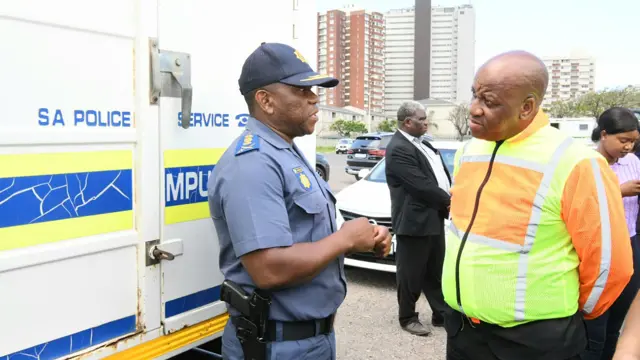
KwaZulu-Natal Premier Thami Ntuli has announced the formation of a technical task team aimed at addressing illegal immigration in the province.
The decision comes after a series of sporadic protests across KwaZulu-Natal, some of which turned violent.
The demonstrations were organised by civic groups and individuals who have voiced opposition to illegal immigration.
[KZN Premier Thamsanqa Ntuli Says Crackdown On Foreign Nationals Is Not Xenophobia]
On Friday, Ntuli and KwaZulu-Natal police commissioner Lieutenant General Nhlanhla Mkhwanazi met with representatives of the March and March Movement, along with government stakeholders, to discuss illegal activities affecting communities throughout the province.
The premier also pledged to engage with traditional leaders and municipalities and to introduce programmes to resolve issues surrounding trading permits.
KZN Government Strengthens Response To Immigration Issues
Speaking at the gathering, Ntuli emphasised the importance of stronger collaboration to confront illegal activities that threaten community safety, economic development and social stability.
“Our history and identity reject xenophobia in all its forms. We recognise that migration itself is not a crime. However, undocumented migration creates vulnerabilities that are too often exploited by criminal syndicates, human traffickers, unscrupulous employers and those who undermine lawful economic participation and social stability,” said Ntuli.
He stressed that while migration should not be criminalised, undocumented migration can create opportunities for exploitation and unlawful conduct.
Police Commissioner Mkhwanazi Vows Tougher Crime-Fighting Operations In KZN
Mkhwanazi reiterated the South African Police Service’s commitment to intensifying efforts to combat crime through visible policing, intelligence-driven operations and cooperation with local communities.
SEE TODAY'S TOP HEADLINES ACROSS LEADING PUBLICATIONS
“I think we’ve reached a stage in our country where we must build more prisons because there’s just criminality at every angle that you get, that’s why our correctional facilities are full. But we’ll keep on working as law enforcement to try and remove those off the street,” said Mkhwanazi.
His remarks reflected concerns over the pressure placed on correctional facilities as law enforcement agencies continue efforts to curb criminal activity.
