
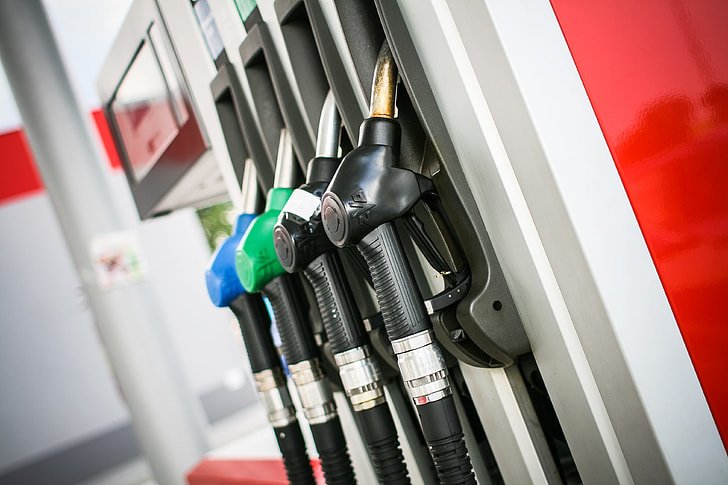
South African consumers are bracing for another sharp rise in fuel prices, with analysts warning that the increases will intensify financial pressure on households already struggling to make ends meet.
The latest adjustments come into effect on 6 May 2026, bringing steep hikes across petrol, diesel and other fuel products. The increases are expected to ripple across the broader economy, affecting transport, food prices and general living costs.
According to the Department of Mineral and Petroleum Resources, petrol prices will climb by R3.27 per litre, while diesel will see a significantly higher jump of R6.19 per litre. Illuminating paraffin is also set to rise by R4.22 per litre.
South Africa Fuel Prices May 2026: Full Breakdown Of Petrol, Diesel And Paraffin Costs
The new pricing structure will push inland petrol prices to R26.52 per litre for 93 octane and R26.63 for 95 octane. Diesel prices are expected to reach between R32.30 and R32.90 per litre, depending on the grade.
Households relying on illuminating paraffin will not be spared, with prices increasing to R28.43 per litre. Meanwhile, LP Gas will rise by R5.70, bringing the cost to R41.12 per kilogram.
Makwe Masilela, founder of Makwe Fund Managers, says while the government has attempted to soften the blow, global market forces remain dominant.
“The government has tried to control whatever is within its powers. In this case, we are talking about taxes on fuel, and we have seen it provide some relief by postponing their implementation. However, other factors are beyond its control.
“In a free market, the rand operates as a floating exchange rate, which limits how much control there is over it, as well as over oil prices. South Africa is a net importer, and as a result, if the rand underperforms, we will continue to see these kinds of increases. As it stands, we know this will be inflationary.”
Rising Fuel Costs Expected To Drive Inflation And Household Expenses Higher
Economists warn that the impact of fuel hikes extends far beyond the petrol station, feeding into transport and food costs across the economy.
Momentum Senior Economist Sanisha Packirismy explains the broader implications for consumers.
“For consumers, this is not just about filling up at the pump. We know that fuel is a key input cost across the economy, so the impact of rising fuel prices feeds through into higher transport costs quite quickly, potentially into higher food prices, and ultimately risks raising broader inflationary pressures.
“In effect, it acts like a tax on everyday living, and it disproportionately affects lower- and middle-income households, which spend a larger share of their income on essentials like food and taxi fares.”
The Department attributes the increases primarily to higher international oil prices, linked to ongoing geopolitical tensions between the United States and Iran. Spokesperson Robert Maake outlined additional contributing factors.
[SAPS Orders Fadiel Adams To Surrender As Arrest Warrant Issued Over Magaqa Case]
“The reasons are, firstly, the higher oil prices on average during the period under review, which led to higher prices of all products. Secondly, the rand was relatively stable against the US dollar during the same period. Thirdly, a slate levy of R1.23 will be implemented in the price structures of petrol and diesel with effect from 6 May. This is in line with the self-adjusting slate mechanism to deal with under-recoveries by oil companies.”
Although the Finance Ministry recently extended a temporary fuel levy reduction to cushion motorists, analysts say the relief is limited.
Rand Swiss market analyst Gary Booysen highlighted the scale of the increases.
“Looking at diesel, we are talking about a price of above R32 a litre as the official diesel price in May. Petrol, for 95, is expected to be around R26.63 a litre. It is absolutely staggering, and that is going to feed into the economy. Everything that needs to be transported will be affected, and that cost will have to be recovered in the price of final goods. As a result, consumers are going to have to tighten their belts.”
Inflation Outlook And Interest Rate Risks Amid Fuel Price Volatility
Economists are also raising concerns about inflation, which currently stands at 3.1%. Nedbank economist Johannes Khoza says fuel volatility could push inflation beyond the central bank’s target range.
“Headline inflation is expected to peak at around 5% during the second quarter before easing gradually in the second half of this year. On average, inflation is expected to be about 4% in 2026.
SEE TODAY'S TOP HEADLINES ACROSS LEADING PUBLICATIONS
“However, risks to this forecast remain skewed to the upside. Second-round effects from higher fuel prices and sustained weakness in the rand could lift inflation expectations and potentially force the central bank to lean more strongly against an inflation spiral.”
Khoza added that while interest rates may remain unchanged in May, further increases cannot be ruled out if inflationary pressures intensify in the coming months.
