
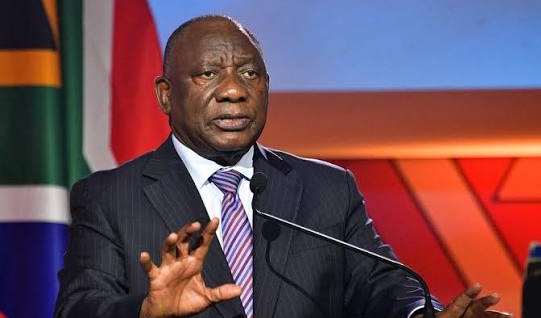
President Cyril Ramaphosa’s attempt to overturn the report that paved the way for his Phala Phala impeachment inquiry has drawn an unlikely comparison — a court case involving a schoolboy suspended from class.
Ramaphosa’s legal team relied on the judgment during arguments before the Western Cape High Court on Wednesday, challenging the contention that his application was brought prematurely.
The president is asking the court to set aside the Section 89 independent panel report, which found in November 2022 that sufficient evidence existed for him to face four impeachment charges.
The report followed the theft of about US$580,000 in cash from his Phala Phala game farm in Limpopo in February 2020. The independent panel was chaired by former chief justice Sandile Ngcobo.
Ramaphosa Challenges Phala Phala Impeachment Report
The respondents opposing Ramaphosa’s application argue that he should have allowed Parliament to complete its impeachment inquiry before approaching the courts.
Ramaphosa’s advocate, Wim Trengove SC, disagreed, arguing that the panel’s findings had already created legal consequences for the president and could therefore be challenged.
To illustrate his argument, Trengove referred the full bench to a case involving a schoolboy who had challenged his suspension before his disciplinary hearing had taken place.
The argument in that case was that the pupil had approached the court too early because the suspension was only temporary.
Trengove said the court had rejected that position after finding that the suspension could have serious consequences for the pupil, including possible expulsion and damage to his reputation.
“If that goes for a school pupil, how much more is that to our president, who is publicly shamed, publicly humiliated by a prosecution for serious constitutional misconduct?” Trengove told the court.
“If a school child is protected against that class of damage, then all the more is the president entitled. Not to suspension from school, but impeachment as head of state.”
The case is being heard by Judge President Nolwazi Mabindla-Boqwana, Judge Mark Sher and Judge Ncumisa Mayosi.
Arguments are expected to continue until Friday.
Legal Team Challenges Four Impeachment Charges
Trengove also challenged the substance of the independent panel’s findings, arguing that it had failed to apply the correct test when considering the four charges against Ramaphosa.
Under Parliament’s impeachment rules, a president can be removed for serious misconduct involving deliberate and bad-faith conduct.
“We’re not going to argue on these charges that the panel asked the right questions but gave the wrong answer,” Trengove said.
“Our argument is a simpler one. They didn’t even ask the question.”
He argued that Ramaphosa’s legal team was not asking the court to decide whether the panel had reached the correct conclusions, but whether it had applied the correct legal test.
“You ask the wrong question, it doesn’t matter what your answer is, because you asked the wrong question in the first place,” Trengove said.
The first charge relates to an alleged breach of the prohibition on members of the executive performing other paid work.
Trengove argued that Ramaphosa owned an interest in the farm but was not employed by the business, did not receive remuneration from it and had disclosed his interest in Parliament’s register.
“The president says, ‘of course I own a farm’.”
“The farm is run by a manager and employees. I don’t do work for the farm and I don’t get paid for the farm,” he said.
The second charge concerns the alleged failure to report the theft directly to the Hawks.
Trengove said Ramaphosa reported the burglary to Major-General Wally Rhoode, the head of the Presidential Protection Unit, and expected the matter to be dealt with through the appropriate channels.
“It is a little bit absurd to suggest that a president should go off to the police station to report to a member of the Hawks that there’s been a break-in at his home,” he said.
The remaining two charges concern instructions Ramaphosa gave Rhoode following the burglary.
Trengove argued that the president was entitled to treat the matter as a security issue and instruct Rhoode to establish what had happened.
He also disputed the suggestion that Ramaphosa should be held responsible for the manner in which Rhoode subsequently handled the investigation.
“There is nothing in the charges that alerted the president to the fact that he was being held responsible for the improper execution of an investigation done by General Rhoode,” he said.
ATM Opposes Ramaphosa’s Court Bid
The African Transformation Movement (ATM), which was behind the 2022 impeachment motion, is opposing Ramaphosa’s application.
Its advocate, Anton Katz SC, argued that courts should only intervene in an unfinished parliamentary process where an applicant could demonstrate that serious and irreversible injustice would result.
Katz said Ramaphosa had not made such a case in his founding papers.
“There is not one word on material or irreversible harm that could not be remedied in the founding papers,” Katz said.
“Not one word.”
He argued that Ramaphosa’s objections should instead be dealt with within Parliament and that the president would have an opportunity to challenge the allegations during the impeachment process.
[Steve Biko Was Beaten Repeatedly, Not Injured In A ‘Scuffle’, Inquest Hears]
Katz also rejected the argument that the parliamentary process would necessarily harm Ramaphosa’s dignity.
“His dignity is affected by not having an inquiry, with question marks hanging over him,” he said.
He further relied on the principle of separation of powers, arguing that the courts should not dictate how Parliament carries out its constitutional oversight responsibilities.
Phala Phala Impeachment Process Reopened
The controversy dates back to June 2022, when former State Security Agency director-general Arthur Fraser reported to police that millions of dollars had allegedly been stolen from Ramaphosa’s Phala Phala farm and that the incident had subsequently been covered up.
ATM leader Vuyolwethu Zungula relied on the allegations when he initiated the impeachment process in Parliament.
The National Assembly voted in December 2022 against proceeding with the impeachment.
However, the Constitutional Court later set that decision aside and ordered that the independent panel’s report be referred to Parliament’s impeachment committee.
The impeachment process was subsequently reopened more than three years after the National Assembly initially voted against proceeding.
The committee has been prevented from holding public hearings while Ramaphosa’s review application is being considered.
SEE TODAY'S TOP HEADLINES ACROSS LEADING PUBLICATIONS
Ramaphosa has consistently denied wrongdoing and has said the foreign currency involved was proceeds from a game sale.
The court is expected to hear further arguments on Thursday.
