
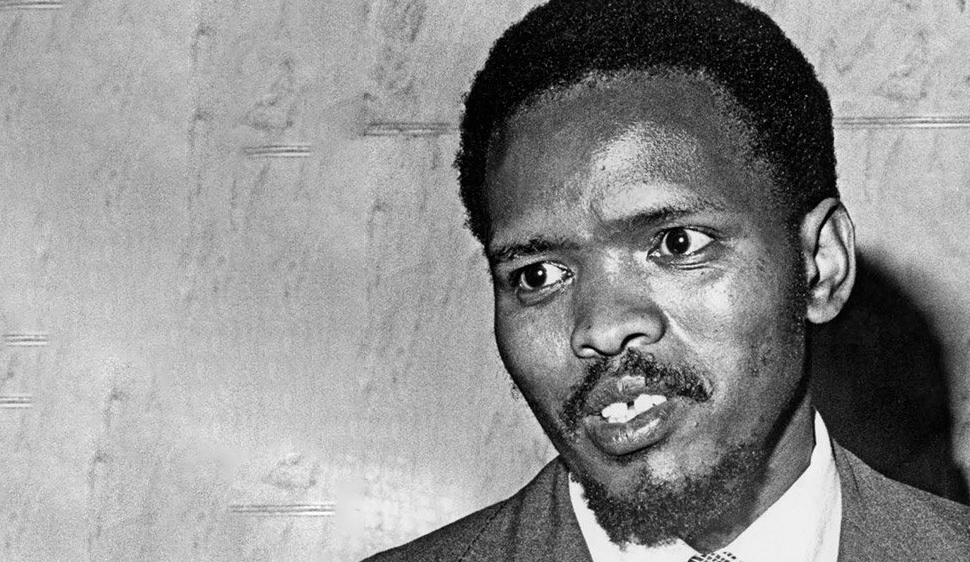
Forensic evidence presented at the reopened Steve Biko inquest has challenged the apartheid police version of events, with a specialist pathologist saying his injuries were sustained over an extended period.
The apartheid police claimed that Black Consciousness Movement leader Steve Biko suffered his fatal injuries during a “scuffle” with officers.
But specialist forensic evidence presented at the reopened inquest on Tuesday painted a very different picture, with pathologist Dr Shakeera Holland telling the court that Biko’s extensive injuries could not have resulted from a single incident.
Holland said there was “no evidence” to suggest that the injuries recorded during Biko’s original autopsy were all inflicted at the same time. Instead, she said some injuries had been sustained hours earlier, while others could have occurred several days before his death on 12 September 1977.
Biko was just 30 when he died in police custody.
Forensic Evidence Reveals Extent Of Steve Biko’s Injuries
Holland, who heads the Forensic Medicine and Pathology Division at the University of the Witwatersrand and has performed more than 5,000 autopsies, reviewed the original post-mortem conducted by Dr Johann Loubser on 13 September 1977.
She took the inquest through Loubser’s findings, detailing injuries recorded across Biko’s body.
The autopsy documented both old and fresh open wounds, brain necrosis, lung damage, signs of kidney failure, skin abrasions, head injuries, a swollen brain and several small haemorrhages.
Burn injuries were also recorded.
Holland said some of the injuries were consistent with blunt-force trauma caused by an object such as a pipe.
The evidence came a day after anti-apartheid activist Monde Mditshwa told the inquest that apartheid police had used a green hosepipe to assault detainees. He said the hosepipe was known as the “Green Mamba”.
Holland also identified what are known as “tramline scars” on parts of Biko’s body. The patterned injuries, resembling parallel railway tracks, were consistent with an assault involving a rod-shaped object.
Under questioning, she accepted that the injuries could also have been caused by a hosepipe.
Holland ultimately concluded that Biko had suffered repeated trauma to his head over an extended period, with the injuries eventually causing his death.
Police ‘Scuffle’ Account Contradicted By Injury Pattern
The evidence directly challenged the account previously given by apartheid police officers involved in Biko’s death.
According to the National Prosecuting Authority’s account during the Truth and Reconciliation Commission in 1997, five former senior apartheid police officers applied for amnesty over their involvement.
They were Major Harold Snyman, Captain Daniel Petrus Siebert, Captain Jacobus Johannes Oosthuysen Benecke, Warrant Officer Rubin Marx and Sergeant Gideon Johannes Nieuwoudt.
The officers claimed Biko had attacked one of them with a chair after sitting down without permission.
They said a struggle followed as they attempted to restrain him and that Biko struck his head against a wall.
The officers later admitted that they had colluded to fabricate their accounts and submitted false affidavits during the initial investigation.
Holland told the inquest that the police version did not correspond with the nature, pattern or different ages of the injuries found during Biko’s autopsy.
She agreed under further questioning that the multiple injuries, including the severe trauma to his brain, would have been inflicted over an extended period rather than during one isolated confrontation.
Biko’s Condition Deteriorated In Police Custody
Biko was arrested with Peter Jones at a roadblock near Makhanda, then known as Grahamstown, on 18 August 1977.
He was initially taken to Baakens Police Station, now known as Walmer Police Station, before being transferred to the former apartheid security police headquarters in Central, Gqeberha.
It was there that Biko was severely tortured.
He remained in security police custody as his condition deteriorated, with medical assistance only sought after officers noticed foam around his mouth.
[Paul Mashatile Recovering Well After Surgery, Deputy President’s Office Says]
On Monday, Dr Paul Hersch, the son of the late Dr Colin Hersch, told the inquest that his father had recommended that Biko be examined by a neurosurgeon.
That recommendation was not followed.
Hersch senior had examined Biko but did not treat him. His son told the inquest that his father believed the outcome could have been different had the recommendation been followed and had he remained more closely involved in Biko’s treatment.
On 11 September 1977, Biko was transported naked and unconscious in the back of a police vehicle from Gqeberha to Pretoria, where he was taken to a prison hospital.
Retired Police Brigadier’s Account Challenged
Retired police brigadier Livuhwani Alfred Netswera also gave evidence on Tuesday about information he said he received from a former prisoner, Mohammad Moosa, who claimed to have been incarcerated with Biko at Pretoria Central Prison.
Netswera said he interviewed Moosa in October 1996, but never obtained an affidavit from him.
According to Netswera, Moosa claimed he had come to know Biko while they were dishing out food in prison and said Biko had been assaulted in one of the cells.
However, Biko family legal representative Ngqiqo Sakhela challenged the account by referring to earlier evidence from Gabriel Ndlovu.
In an affidavit, Ndlovu stated that Biko was already bruised, appeared to have been assaulted and was unable to speak when he arrived at the prison.
When Sakhela asked Netswera whether he had independently verified Moosa’s claims about Biko being assaulted, Netswera could only say that Moosa had told him Biko had been beaten with knobkerries.
Sakhela then put it to Netswera that Biko had sustained his injuries and become “severely compromised” in the Eastern Cape, rather than at Pretoria Central Prison.
Netswera did not respond.
He was also unable to answer when Sakhela pointed out that Biko had been transported from Gqeberha to Pretoria on 11 September 1977 and died the following day.
Sakhela further argued that, based on Ndlovu’s evidence, Biko would not have been capable of crying loudly at that stage.
Sakhela described Moosa’s account of seeing Biko while dishing out food as “not believable” and said the evidence was “wrong and incorrect”.
He told the inquest that the information obtained from Moosa “must be treated with caution”.
No evidence is expected to be heard on Wednesday and Thursday.
SEE TODAY'S TOP HEADLINES ACROSS LEADING PUBLICATIONS
Siebert and Benecke, who have been identified as persons of interest in Biko’s death, are expected to testify on Friday, 4 September, and Monday, 7 September, respectively.
Former apartheid spy Craig Williamson, who previously testified during the Cradock Four inquest that he had monitored Biko, is also expected to give evidence on Monday, 7 September.
