
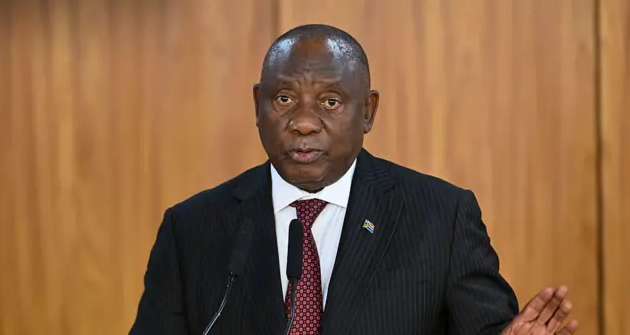
President Cyril Ramaphosa has asked the Western Cape High Court to halt Parliament’s impeachment process, arguing that allowing the inquiry to continue before his legal challenge is decided would cause him “severe harm”. The urgent application is expected to be argued before the court next week.
The president wants the court to suspend the work of Parliament’s Impeachment Committee until it has ruled on his application to review and set aside the findings of the Section 89 Independent Panel. That review application is scheduled to be heard from 2 to 4 September 2026.
Although the court challenge is pending, members of the Impeachment Committee are expected to continue preparations by submitting the names of potential evidence leaders and proposals for the inquiry’s terms of reference.
Cyril Ramaphosa Says Section 89 Panel Misunderstood Its Mandate
The Section 89 panel forms the centre of Ramaphosa’s legal challenge. In court papers, the president argues that the panel made fundamental errors in interpreting its responsibilities under the National Assembly’s rules.
His legal team said the review application identifies several flaws in the panel’s report but highlighted two key grounds before the court.
“They are: the panel fundamentally misunderstood its mandate under the National Assembly’s rules, and under the National Assembly’s rules, the president was only guilty of impeachable conduct if he acted in bad faith. The panel, however, overlooked this requirement in its assessment of the president’s conduct. It never asked itself or determined that the president had acted in bad faith.”
The papers further argue that the panel applied the wrong legal standard when deciding whether the matter should proceed.
“We submit with respect that the panel clearly misunderstood its mandate. It was meant to ask itself whether there was ‘sufficient evidence’ to warrant an impeachment hearing against the president. It mistakenly lowered the bar by asking itself merely whether there was a prima facie case against the president. That was a fatal flaw.”
Impeachment Inquiry Could Cause ‘Severe Harm’, Court Told
The impeachment inquiry should be paused until the review application has been decided, according to Ramaphosa’s legal team. They argue that continuing with the process before the court has ruled would unfairly expose the president to a public hearing.
In his affidavit, Ramaphosa said the consequences would be significant.
“He will suffer severe harm if he is subjected to the ignominy of a public hearing before the lawfulness of the panel report is established.”
[DA Calls For Lifestyle Audit As Fikile Mbalula Defends Dina Pule’s Cabinet Appointment]
His lawyers also contend that the National Assembly’s rules were specifically designed to prevent a sitting president from facing a public impeachment process based on allegations that have not been properly tested.
“They do so by requiring a panel to consider and report on an impeachment motion before it is referred to a public hearing. The president will be deprived of this protection if he is forced to submit to an impeachment hearing before the lawfulness of the panel’s report has been determined.”
The court papers further state that the president’s review application has strong prospects of success.
“It has been held that when considering the balance of convenience, it is also appropriate to take the national interest into account where that is applicable. The founding affidavit clearly sets out the harm that the president suffers and will continue to suffer if the interim interdict is not granted.”
Cyril Ramaphosa Rejects Claims His Court Application Is Not Urgent
Ramaphosa has also disputed arguments that he delayed bringing the application and that the matter lacks urgency. His legal team said several procedural steps had to be completed before approaching the court.
According to the papers, the president first obtained permission from the Chief Justice and the Gauteng Judge President before instituting proceedings against retired judges. He then sought agreement from the Speaker of the National Assembly and the chairperson of the Impeachment Committee to suspend the process without litigation.
“It was only when the chair declined the request of a stay that the president brought the urgent application…. We submit that the application is urgent.”
SEE TODAY'S TOP HEADLINES ACROSS LEADING PUBLICATIONS
The president’s lawyers also rejected claims that the judiciary should avoid intervening because of the separation of powers doctrine. They argued that the dispute is exceptional and that the courts have a duty to ensure both Parliament and the Executive act within the law.
“What they overlook, however, is that this is an unusual case. It lies at the cutting edge of the intersection between the National Assembly, on the one hand, and the president, as head of the National Executive, on the other.”
