
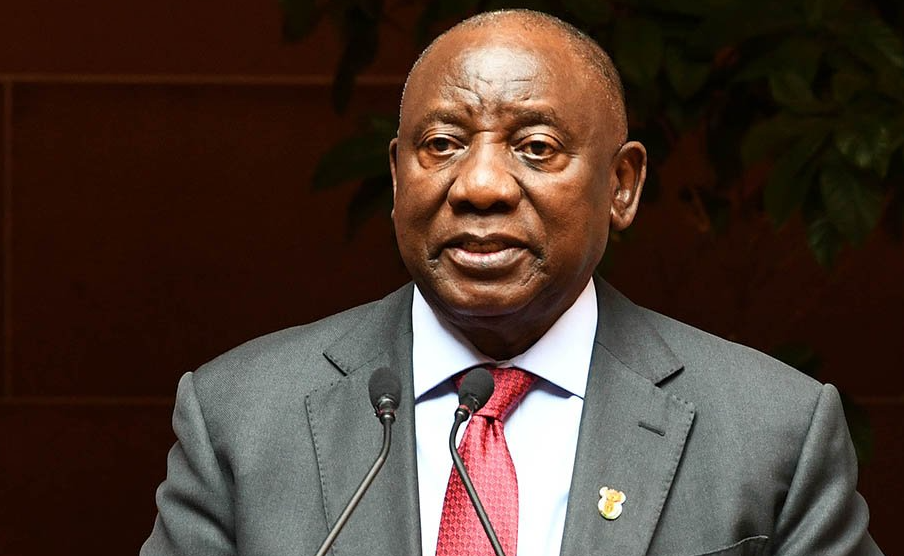
President Cyril Ramaphosa has told Parliament that arrests and criminal charges will follow against people found responsible for violence targeting African foreign nationals.
Ramaphosa made the commitment while answering oral questions from MPs on Tuesday, after EFF leader Julius Malema challenged the government over its response to the attacks.
Malema questioned why people allegedly responsible for organising and carrying out the violence had not been arrested and prosecuted, arguing that attacks had taken place in the presence of police.
Ramaphosa Says Police Are Tracking Anti-Migrant Violence
Malema said those behind the violence were known and questioned why arrests had not already been made.
“The level of violence perpetrated against African foreign nationals in this country over the past few months has a face. We know who the investigators, the instigators and the perpetrators of this act are,” Malema said.
He also claimed that two people he believed were involved had met with Ramaphosa.
“What’s worse is that the two of them came to meet you. You should have locked them up that day when they came to meet you,” Malema said.
Ramaphosa said the matter was being handled by the police and other security agencies, which were collecting information and evidence.
“The issue of the instigators of these violent actions that have been taken against people from other countries is a matter that is being processed,” Ramaphosa said.
“The police have informed us, and all security apparatus have informed us that they are following all that up. They are getting all the reports and evidence.”
The president said several arrests had already been made and that investigators were also looking into people believed to be leading the processes behind the violence.
“And that is a process that is going to be followed up,” he said.
Ramaphosa Vows Charges In Cases Of Injury And Death
Ramaphosa said the government was concerned about violence against African nationals and that people who broke the law would face the consequences.
“We are obviously concerned about the actions that have been taken against many Africans in our country. And we have made it clear that those who violate the law, those who transgress various precepts of our laws, need to be dealt with.”
He said investigations would also cover incidents in which people had been injured or killed.
“And the number of cases where, for instance, incidents of violence have even resulted in injury, or even death, we are going to be following all that up and ensuring indeed that those who have perpetrated those acts are followed up.”
Ramaphosa was unequivocal about the government’s intention to pursue those responsible.
“And there will be arrests, and there will be charges that will be prepared against those who have done so,” Ramaphosa said.
He added that the police and prosecuting authority would continue pursuing the cases.
Ramaphosa Rejects Claims Of South Africa’s African Isolation
The exchange in Parliament also focused on South Africa’s standing on the continent amid concerns over anti-migrant actions.
Responding to a question about measures to restore the country’s credibility as a Pan-African voice, Ramaphosa described South Africa as “a respected member of the African community of nations and a principled Pan-African actor”.
He said the government had publicly rejected “xenophobia, afrophobia, vigilantism, and all forms of discrimination against people from other countries”.
Ramaphosa said South Africa had continued working with the Southern African Development Community (SADC), the African Union and other partner states on immigration, governance, regional integration and burden sharing.
[EFF Takes Aim At Thoko Didiza In High-Stakes Parliament No-Confidence Vote]
He also referred to the 46th Ordinary SADC Summit hosted by South Africa, saying regional leaders had been briefed on the situation.
“This we did without being asked either to account or to explain. We took it upon ourselves to put the matter on the agenda, and I also addressed it in my inputs, and we explained precisely what the situation had been in our country.”
According to Ramaphosa, the summit called for “a coordinated and multi-dimensional dialogue at the regional level” to address the drivers of migration and develop sustainable responses.
He said South Africa’s migration policy was based on the rule of law and respect for human dignity, while efforts were also being made to strengthen state institutions.
The president pointed to measures including tighter border management, action against corruption in the immigration system, improved legal migration pathways and implementation of the White Paper on Citizenship, Migration and Refugee Protection.
Ramaphosa Says South Africa Is Not Being Isolated
Ramaphosa also rejected suggestions that South Africa was being isolated by other African countries.
He said International Relations and Cooperation Minister Ronald Lamola had travelled to several countries as his envoy and had received a positive reception in Ghana and elsewhere.
“At times it has been quite challenging to synchronise the diaries of all heads of states,” Ramaphosa said.
The president said he had also spoken to several heads of state who understood the challenges facing South Africa and had indicated their willingness to support the country.
SEE TODAY'S TOP HEADLINES ACROSS LEADING PUBLICATIONS
“While other people might have thought that we are being snubbed and we are being isolated, actually the contrary has been the case,” Ramaphosa said.
He said several countries remained willing to work with South Africa in addressing the challenges.
