
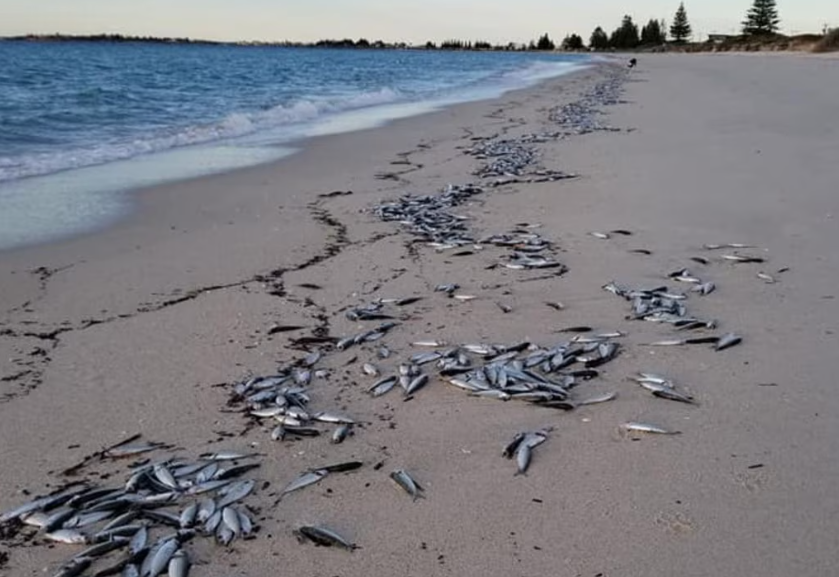
A virus previously linked to major sardine die-offs in Australia and New Zealand has been detected in every South African sardine tested during the latest mass mortality event.
The Department of Forestry, Fisheries and the Environment (DFFE) confirmed that Pilchard Herpesvirus (PHV) was found in the tested fish, including sardines that appeared healthy. Scientists, however, say the finding does not prove that the virus caused the deaths.
The latest sardine deaths have been reported at several locations along the Western Cape coastline, stretching from Saldanha Bay to Gansbaai. Fisheries scientist Janet Coetzee said the discovery was significant, but cautioned against drawing conclusions before further testing is completed.
[Eastern Cape Man Arrested For Allegedly Beating His 69-Year-Old Mother To Death]
“We can now confirm that Pilchard Herpesvirus, or PHV, is present in all of the sardines we tested, including in apparently healthy fish. What this means is that finding the virus does not automatically mean that it caused this event,” Coetzee said.
The discovery has renewed attention on PHV because of its history in Australia and New Zealand. The virus was linked to large pilchard mortality events during the 1990s, including an outbreak in 1995 that spread across thousands of kilometres.
Pilchard Herpesvirus Linked To Past Sardine Die-Offs
Pilchard Herpesvirus has previously been associated with severe sardine deaths in Australia and New Zealand. During the 1995 outbreak, mass deaths began in South Australia before spreading across the Australian pilchard population and reaching New Zealand.
Another major outbreak followed in 1998 and 1999. Research into those events detected PHV in the gills of affected sardines and linked the virus to extensive mortality.
“This virus was, however, previously linked to very large sardine die-offs in Australia and New Zealand during the 1990s. The virus is known to damage the fish’s gills, preventing them from absorbing enough oxygen from the water,” Coetzee said.
One study found that the 1995 outbreak covered more than 5,000km of Australian coastline and about 500km of coastline in New Zealand. However, scientists are still investigating whether the South African deaths have the same cause.
South African Sardine Deaths Still Under Investigation
The presence of PHV in apparently healthy sardines has made it difficult to establish whether the virus is responsible for the current mortality event. Scientists need to determine whether the virus is causing illness and death or whether it is already present within the wider sardine population.
Authorities have also ruled out some other possible explanations. “PHV is not known to infect people, and recent toxin test results do not suggest that harmful algae were the main cause of the die-off,” Coetzee said.
South African authorities are now expanding the investigation and working with the fishing industry. “We have briefed the fishing industry and are forming a joint task team to co-ordinate further testing, monitoring and the broader response,” Coetzee said.
[Farm Owner Assaulted, Workers Tied Up As Fake Police Officers Raid Limpopo Farm]
The investigation will establish whether PHV is driving the deaths or whether another environmental factor is involved. Scientists are also examining the findings against previous research into sardine mortality events overseas.
Public Warned Not To Eat Dead Sardines
SEE TODAY'S TOP HEADLINES ACROSS LEADING PUBLICATIONS
The DFFE has urged members of the public not to collect or consume sardines that have died or are dying. The department has also warned people against feeding the affected fish to their pets while investigations continue.
The discovery of PHV has added an important lead to the investigation, but authorities have stressed that its presence alone cannot confirm the cause of the deaths. Further testing and monitoring will be needed before scientists can determine what is behind the latest sardine mortality event along the Western Cape coast.
