
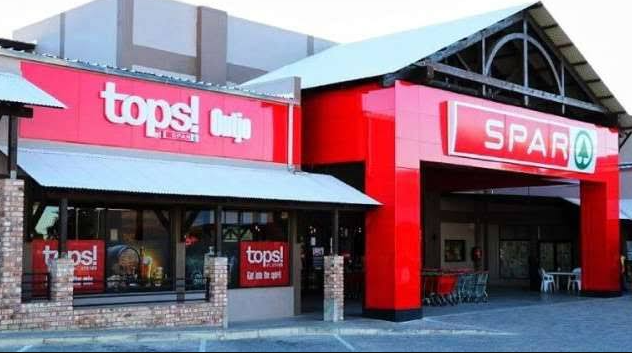
SPAR has denied widely shared claims on social media that the March and March anti-migrant protests resulted in the supermarket group creating 15 000 jobs for South Africans. The retailer described the claims as false and said no such recruitment campaign exists. The posts have circulated across several social media platforms following demonstrations targeting businesses accused of employing foreign nationals.
SPAR Rejects 15 000 Jobs Claim Linked To March And March
The viral claim gained traction through videos and posts on Facebook, Instagram and X. In one of the most widely shared videos, Nkosikhona “Phakelumthakathi” Ndabandaba alleged that SPAR had opened 15 000 job opportunities for South Africans, including nearly 1 000 positions in Durban and 500 workers replacing foreign nationals at Umbilo.
SPAR said the allegations were entirely inaccurate. The company stressed that it had not announced any recruitment drive of that scale and that the information being shared online was not authorised by the retailer.
“The SPAR Group South Africa is aware of social media posts falsely claiming that SPAR has launched a recruitment drive for 15 000 jobs, including misleading assertions about the reasons these positions have allegedly become available.”
The retailer added: “We categorically reject these claims. SPAR South Africa is not advertising 15 000 jobs, and no such recruitment initiative exists.”
“These false and misleading posts are being circulated without authorisation and do not reflect any communication or initiative of The SPAR Group South Africa.”
SPAR Says Recruitment Follows Standard Employment Processes
SPAR said recruitment remains part of its normal business operations across its corporate offices, distribution centres and independently owned stores. The company said employment opportunities are filled through its established hiring procedures rather than through extraordinary recruitment campaigns.
“As one of South Africa’s largest employers, SPAR creates employment opportunities across its corporate operations, distribution centres and independently owned SPAR stores. Recruitment is an ongoing part of operating a business of our scale through established recruitment processes.”
[SAHRC Welcomes Court Ruling Against Ngizwe Mchunu Over LGBTQ Hate Speech]
The retailer also rejected suggestions that employment decisions are based on nationality. It said hiring is guided by South African labour legislation, the needs of each position and an applicant’s legal eligibility to work in the country.
“SPAR is committed to fair, lawful and responsible employment practices in accordance with South African labour legislation. Employment decisions are based on the requirements of the role, relevant skills, experience and legal eligibility to work in South Africa.
“We employ people who are legally entitled to work in the country, regardless of their nationality. We are committed to maintaining workplaces that are safe, respectful and inclusive, and do not tolerate discrimination of any kind.”
The company said genuine vacancies are advertised through its official recruitment channels or, where applicable, through independently owned SPAR stores.
South African Employment Laws Already Regulate Foreign Workers
The SPAR claim forms part of a broader trend of misinformation linking the March and March protests to supposed job creation across various sectors, including retail, restaurants, delivery services, factories and domestic work. Many of these claims have been shared without supporting evidence and often rely on the assumption that foreign nationals working in South Africa are undocumented.
SEE TODAY'S TOP HEADLINES ACROSS LEADING PUBLICATIONS
While some leaders of the March and March movement have said their focus is on undocumented migrants, South African law already prohibits employers from hiring foreign nationals who do not possess valid work documentation. The Department of Employment and Labour says employers must ensure foreign workers have the appropriate work visas issued by the Department of Home Affairs before they are employed.
The rules also recognise that some foreign nationals may legally work in South Africa. Zimbabwe Exemption Permit holders remain legally documented under the current extension until 29 May 2027, while recognised refugees with Section 24 permits may seek employment. Asylum seekers with Section 22 permits may also be permitted to work depending on the conditions attached to their documentation.
