
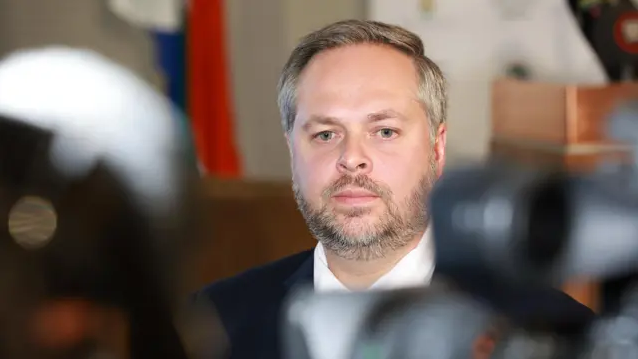
Home Affairs Minister Leon Schreiber says the government is stepping up efforts to tackle illegal immigration through increased deportations, advanced biometric systems and stronger action against corruption within the department.
Speaking after presenting the department’s budget speech, Schreiber defended the government’s immigration enforcement measures as frustration over illegal immigration continues to grow across South Africa.
He said the department remained committed to a “rule of law” approach by increasing deportations while safeguarding the rights of foreigners who are legally residing in the country. According to Schreiber, deportations have risen by 46% under the current administration.
Leon Schreiber Increases Deportations And Immigration Enforcement
Schreiber said the Department of Home Affairs had carried out more immigration enforcement operations during the past financial year than in the previous five years combined.
His remarks come amid heightened public debate around illegal immigration, with recent demonstrations and marches targeting undocumented foreign nationals in several parts of the country.
The minister also warned against vigilantism and racial profiling.
“If you are upset about illegal immigration because it undermines the rule of law, then you cannot turn around and undermine the rule of law yourself,” he said.
The Times Post understands that government officials are attempting to strengthen enforcement measures while discouraging unlawful action against migrants.
Biometric Immigration System To Strengthen Border Security
A key component of the department’s strategy is the rollout of a digitised immigration system designed to improve border security and identify undocumented individuals more effectively.
Schreiber explained that the Electronic Travel Authorisation system requires travellers to submit biometric information, including selfies that are matched with passport photographs.
The department is also using machine-learning technology to verify travel documents and detect fraudulent passports. Schreiber said biometric verification would eventually be expanded to all visa categories.
According to the minister, the technology-driven system will allow authorities to enforce immigration laws without relying on physical documents that can be altered or forged.
Constitutional Court Ruling Expected To Reduce Asylum Backlogs
Schreiber also referred to a recent Constitutional Court victory involving repeat asylum applications.
He said the government had successfully argued that rejected asylum seekers should not repeatedly submit new applications purely to delay deportation.
The ruling is expected to assist Home Affairs in reducing asylum backlogs and accelerating the removal of individuals whose applications have already been rejected.
The minister further highlighted the proposed “safe country” principle, which would stop asylum seekers from bypassing other safe countries solely to enter South Africa.
Home Affairs Targets Corruption With Technology And Arrests
Schreiber acknowledged ongoing public concerns regarding corruption within Home Affairs and at border control points.
He said officials implicated in fraud and corruption were increasingly being arrested, dismissed and prosecuted.
According to the minister, since July 2024, Home Affairs has secured several arrests, convictions and dismissals linked to corruption cases involving both the department and the Border Management Authority.
[11 North West Drug Lab Suspects To Appear In Swartruggens Court Over R1 Billion Operation]
SEE TODAY'S TOP HEADLINES ACROSS LEADING PUBLICATIONS
He added that replacing paper-based systems with biometric verification technology would play a major role in reducing fraud and document manipulation.
“We use technology to solve these issues,” Schreiber said.
